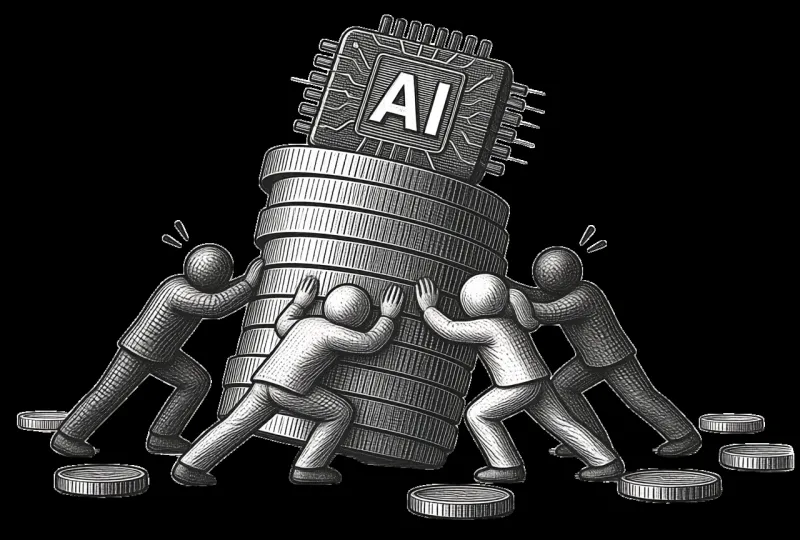
AI can make a draft, analysis or campaign faster to produce. That does not mean the business is getting better results. If a team has not tested its assumptions, agreed on the problem or clarified who owns a decision, faster production can multiply the consequences of those gaps. The question for leaders is what their current way of working will cause them to scale.
The Productivity Paradox: More Output, Not Always Better Outcomes
Time saved on one task only benefits the business if the work moves toward a useful result. A proposal drafted quickly may still trigger hours of correction and customer clarification. A campaign made faster can miss its audience. Individual output and collective performance are different measures: AI can support both, but counting completed tasks does not show whether people made better decisions together.
Four recurring teaming failures explain why more output may not translate into better outcomes. In each case, the technology can increase the reach of a team’s existing habits before anyone notices the cost.
Four Teaming Failures AI Can Amplify
Poor challenge lets an assumption become a plan. A team may accept an AI analysis that identifies an attractive customer segment without checking whether the data reflects current buying behavior or whether the segment is profitable to serve. Campaigns and outreach then build on the same untested premise. Leaders can ask: what evidence would make us reject this recommendation?
Premature decisions replace diagnosis with a quick solution. If cancellations rise, a retention offer may look actionable. But if customers are leaving because of service delays or product issues, a discount treats a symptom and leaves the cause in place. Agree on the problem, examine evidence and define the intended outcome before choosing an intervention.
Misalignment allows functions to hit local targets while the business misses its shared goal. Marketing may expand demand, operations reduce costs and sales pursue another segment. Each plan can make sense alone, yet together they may create demand the business cannot serve or promises it cannot keep. Teams need to agree on the customer, outcome, constraints and trade-offs before scaling activity.
Execution gaps appear when everyone contributes but nobody owns the result. A proposal with outdated pricing can reach a customer if sales, finance and operations each assume someone else checked it. Name who validates critical information, who approves the decision and who monitors its effects, with checkpoints where mistakes could affect customers, finances, compliance or reputation.
Teamitis Is an AI Readiness Issue
These failures are connected patterns of capable people not reliably turning their combined expertise into results. Co-Exponential uses Teamitis™ to examine issues such as unproductive conflict, competing priorities, delayed decisions, unclear accountability and gaps between strategy and execution. Fixing one faulty proposal does not address the conditions that may produce the next one.
A practical test is to ask each person involved in a live decision, independently, to name the intended outcome, decision owner and priority trade-off. Comparing answers can show whether responsibilities are actually shared. This work complements technical expertise, reliable data and AI governance by addressing how people coordinate judgment and accountability around the technology.
What Leaders Can Do Now
Choose a workflow where rework, delays, conflicting decisions or unclear ownership already affect results. Find recurring patterns using real examples, clarify who recommends, contributes, decides and approves, and make constructive challenge a defined step before commitments are made. Align on the customer, outcome, constraints and success measures before automating.
Measure changes in rework, errors, delays or customer impact, then assign someone to review and adjust the process. The goal is not to add approval layers. It is to surface problems earlier and make decisions at the point where they matter. Before making an AI-assisted workflow faster, understand what keeps making it harder.